


Description
Full disclosure: as far as Portuguese food goes, Sardinhas Assadas are not actually my favourite thing to eat.
Don’t get me wrong. If I turn up to someone’s house and they serve me sardines, I’ll eat them and do my absolute best to look like I’m enjoying them. Most of us were raised with the “Come e calate” mentality. It’s one thing to tell your own mother you don’t like something she cooked — you might get a wooden spoon or, worse, one of those looks that somehow makes you feel like a disappointment because your palate is just a little too Australian to appreciate fish that isn’t filleted and battered.
But heaven forbid you tell Comadre Conceição you don’t like what she prepared. Suddenly you’ve let down every generation since Dom Afonso Henriques and become the reason Portugal almost didn’t make it through history. You came here to maybe buy a T-shirt and read a silly story. Bet you didn’t expect a history lesson.
So whenever I’m served something I don’t particularly enjoy, I eat it, smile politely, and hope dessert has better times ahead.
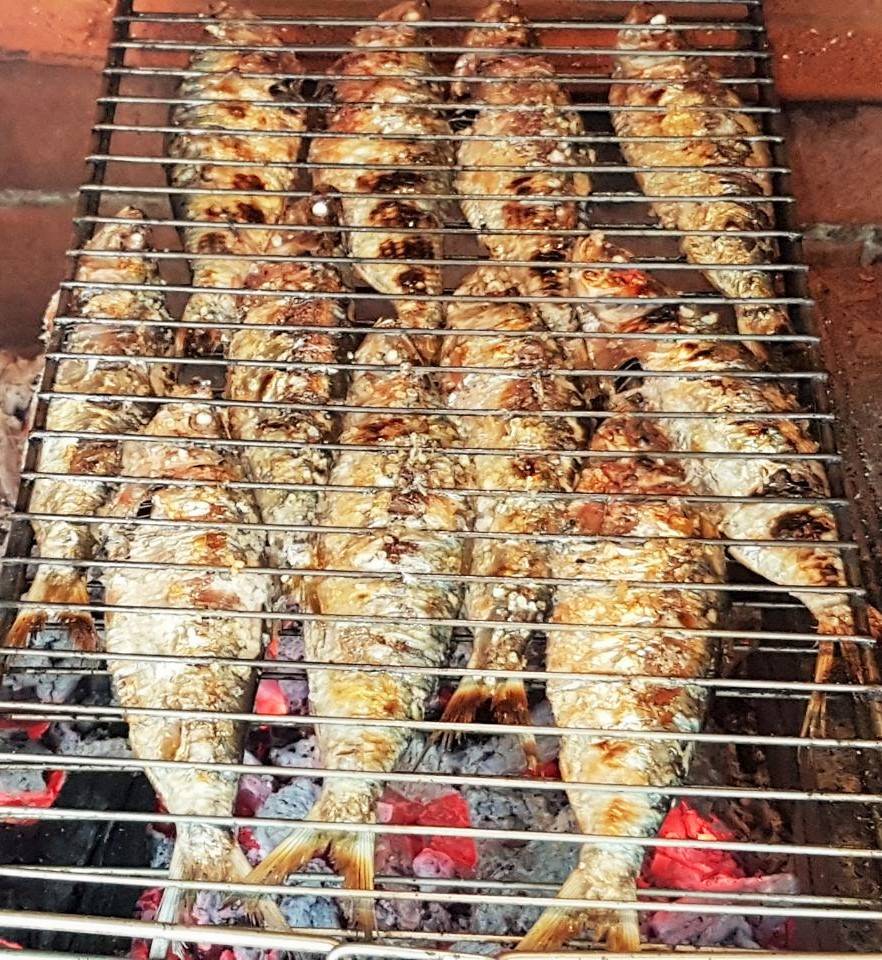
Now, while sardines aren’t my favourite thing to eat, I absolutely love the smell of them grilling over charcoal.
The natural oils in the fish mixed with the smoke from the coals create an aroma that instantly transports you to the streets of Portugal in summer. Somehow you can even smell the rock salt sizzling on the grill. Most of my Aussie mates would probably describe the smell as “aggressive”, but for me it’s pure nostalgia.
The little bones getting stuck in the back of my throat? That part I could happily live without.
The real stars of the meal, though, are the side dishes.
Uma batatinha cozida. Plenty of pão. A cold glass of Vinho Verde.
If your family is from the Algarve, maybe there’s a bowl of Arjamolho on the table — sort of like Spanish gazpacho, except obviously better because it has wet bread in it. Other families might have a roast capsicum salad or just a simple garden salad. Every family has their own version, but somehow it always feels like summer.
Australian customs laws prevent us from importing fresh Portuguese sardines, so while I can tell you how to cook them, I highly recommend visiting Portugal during the summer to experience the real thing. There really is nothing quite like standing at a festival, balancing a sardine on a piece of bread, with a cold glass of Vinho Verde in your hand.
Until someone figures out how to smuggle a Portuguese summer into Australia, this is probably the closest we’re getting.
The Oporco Sardinha Ritual
The Heat: Get your Weber or charcoal barbecue absolutely screaming hot.
The Prep: Keep it simple. Plenty of coarse rock salt. Don’t overcomplicate it. The fish should be the star.
The Grill: Cook until the skin is charred and crispy. If you’re using Garfish they cook quickly, so keep an eye on them.
The Finish: Serve directly onto a slice of crusty bread to soak up all the juices. Add boiled potatoes and a simple salad.
The Essential: A cold, crisp glass of Vinho Verde.
Without the Vinho Verde it’s just lunch.
With it, it’s a lifestyle.
If fresh Portuguese sardines aren’t available, Garfish, Mackerel or Australian Pilchards are great substitutes. And if you’re too embarrassed to ask your fishmonger for bait fish, a fresh Snapper or Bream over charcoal with plenty of rock salt will get you surprisingly close.
You may notice this Prato do Dia drop isn’t the usual black tee with white print.
This time it’s grey marle with black text.
The grey represents the silver of the sardinhas.
The black represents the char marks left behind on the grill.
Simple.






Reviews
There are no reviews yet.